Why Loft Cleaning Matters Before Re-Insulating
When homeowners discover their loft insulation needs replacing, the temptation is to get on with fitting new materials straight away. However, skipping...
Why Loft Cleaning Matters Before Re-Insulating
When homeowners discover their loft insulation needs replacing, the temptation is to get on with fitting new materials straight away. However, skipping the cleaning stage beforehand can undermine your entire investment. Old debris, contaminated materials, and dust don’t just disappear when you lay fresh insulation on top — they create ongoing problems that reduce performance and can affect indoor air quality. Proper preparation of your loft space isn’t just recommended practice; it’s essential for achieving the thermal efficiency you’re paying for.
Hidden Problems That Compromise New Insulation
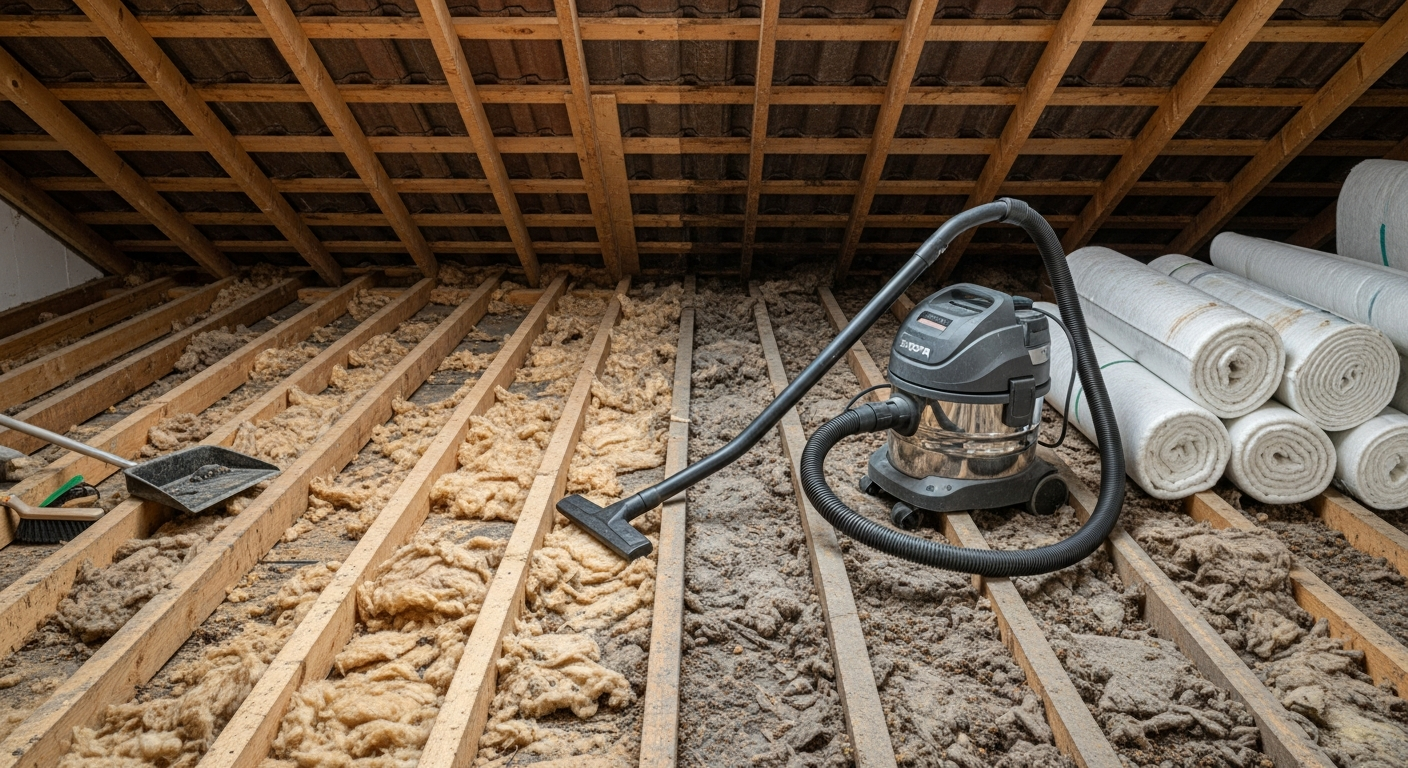
Most lofts accumulate years of debris that homeowners never see. Rodent droppings, old nesting materials, and fragments of deteriorated insulation create a contaminated environment that affects how new materials perform. When fresh insulation sits on top of this debris, it can’t form the continuous thermal barrier your home needs.
Moisture trapped beneath contaminated materials creates ideal conditions for mould growth. Once mould establishes itself in your loft space, it can spread into new insulation materials, compromising their effectiveness and potentially affecting air quality throughout your home. We’ve seen cases where homeowners invested in premium insulation materials, only to find performance issues months later because the underlying contamination wasn’t addressed.
Pest droppings present particular challenges because they continue to break down over time, releasing particles into the air that circulates through your home. These contaminants can trigger respiratory issues and create unpleasant odours that become more noticeable once the loft is sealed with new insulation.
Why Standard Cleaning Methods Fall Short
Traditional cleaning approaches often miss the microscopic particles that cause the biggest problems. Ordinary vacuum cleaners simply redistribute fine dust and allergens rather than removing them completely. These particles are so small they become airborne again within hours of cleaning, settling back into the spaces you thought you’d cleared.
HEPA (High Efficiency Particulate Air) filtration captures particles as small as 0.3 microns with 99.97% efficiency. This level of filtration is crucial in loft spaces because many of the most problematic contaminants — including mould spores, dust mites, and breakdown products from old insulation — fall into this size range.
Professional equipment also generates the suction power needed to remove debris from tight corners, joists, and cavities where contamination typically accumulates. These hard-to-reach areas often harbour the worst problems, and they’re precisely the spaces where new insulation needs to sit properly to create an effective thermal barrier.
Creating the Right Foundation for Peak Performance
Clean loft spaces allow insulation materials to settle evenly and maintain their designed thickness. When debris creates uneven surfaces, insulation can’t form the continuous layer that prevents thermal bridging. Even small gaps in coverage can significantly reduce overall thermal performance, creating cold spots that waste energy and cause comfort issues.
Proper cleaning also reveals structural issues that might affect insulation installation. Loose floorboards, damaged joists, or ventilation problems become apparent once debris is cleared, allowing these issues to be addressed before new materials go in. This prevents future problems that could require removing and replacing insulation to access underlying issues.
The air quality benefits extend throughout your home because loft spaces connect to your living areas through various pathways. When contamination is properly removed using professional loft HEPA vacuum cleaning methods, you eliminate ongoing sources of airborne particles that can affect the air your family breathes daily.
Professional Assessment Makes the Difference
Experienced teams can identify contamination types and cleaning requirements that aren’t obvious to homeowners. Different contaminants require different approaches — what works for general dust won’t address mould problems or pest-related contamination effectively. Professional assessment ensures the right cleaning method for your specific situation.
Documentation of cleaning work also provides valuable information for future maintenance. Understanding what contaminants were present helps predict future issues and plan appropriate prevention measures. This knowledge becomes particularly important if you experience air quality concerns or insulation performance problems down the line.
Key Takeaways
• Old debris and contamination beneath new insulation reduces thermal performance and can affect indoor air quality • Standard cleaning methods redistribute microscopic particles rather than removing them completely • HEPA filtration is essential for capturing the smallest contaminants that cause the biggest problems • Clean loft spaces allow insulation to settle properly and reveal structural issues before they become costly problems • Professional cleaning creates the foundation needed for insulation materials to deliver their designed performance
What Our Customers Say
Trusted by homeowners across Nationwide (Based in Southampton) — here's what they have to say.
"Brilliant service from start to finish. The team were professional, tidy, and explained everything clearly. Our energy bills have dropped noticeably since the new insulation went in."
"Had spray foam removed and mineral wool installed. The inspector was thorough and honest about what needed doing. Really impressed with the quality of work."
"We had terrible condensation in our loft. They diagnosed the problem quickly, improved the ventilation, and replaced the old insulation. No more damp and the house is noticeably warmer."
Frequently Asked Questions
You can typically install new insulation immediately after professional HEPA cleaning, as the process removes rather than redistributes contaminants. However, if moisture issues were discovered during cleaning, allow adequate drying time before proceeding with insulation work.
While there's an upfront cost for professional cleaning, it protects your insulation investment by ensuring optimal performance and longevity. Poor-performing insulation due to contamination issues often costs more to remedy than proper preparation would have cost initially.
Basic debris removal is possible, but microscopic contaminants require professional HEPA equipment to remove effectively. DIY cleaning often misses the particles that cause the most significant long-term problems with insulation performance and air quality. Ready to ensure your loft insulation investment delivers maximum performance? Contact our team to discuss professional cleaning services that create the ideal foundation for your new insulation materials.
Ready for a Free Survey?
No obligation. We assess your property and provide a detailed quote — usually within 48 hours.