Signs of Rodent Damage in Your Loft Insulation
Discovering unwelcome visitors in your loft can be distressing, but knowing what to look for helps you act quickly before the problem escalates. Rodents...
Signs of Rodent Damage in Your Loft Insulation
Discovering unwelcome visitors in your loft can be distressing, but knowing what to look for helps you act quickly before the problem escalates. Rodents can cause significant damage to insulation materials, compromising your home’s thermal performance and creating health hazards. Early identification of these warning signs allows you to address contamination promptly, protecting both your property and family’s wellbeing.
Visual Evidence That Points to Pest Activity
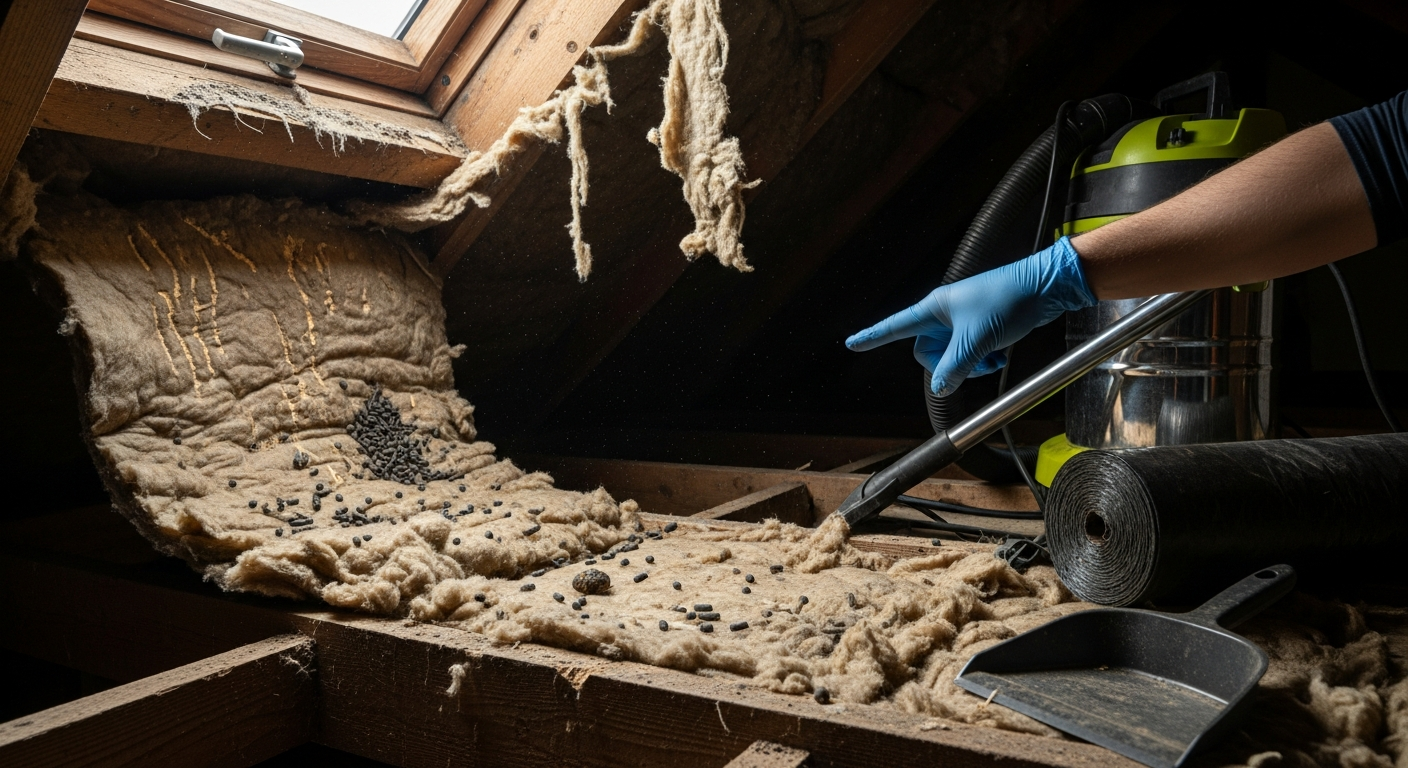
The most obvious indicators of rodent presence are often visual. Look for dark, pellet-shaped droppings scattered throughout your loft space — fresh droppings appear moist and dark, whilst older ones become dry and crumbly. Rats typically leave droppings about 12-18mm long, whilst mouse droppings are smaller at 3-6mm.
Damaged insulation materials provide another clear sign. Rodents shred fibreglass, mineral wool, and other insulation types to create nesting materials. You’ll notice torn sections, compressed areas where animals have travelled repeatedly, and disturbed patches where the insulation appears flattened or displaced from its original position.
Gnaw marks on wooden beams, plastic pipes, or electrical cables indicate active rodent populations. These marks appear as small, parallel grooves and can pose serious safety risks, particularly on electrical wiring where exposed copper creates fire hazards.
Detecting Contamination Through Smell and Sound
Your nose often identifies problems before your eyes do. A persistent ammonia-like odour in your loft space typically indicates urine contamination in the insulation. This smell becomes more pronounced in warm weather and may drift into living areas below, particularly around light fittings or through gaps in the ceiling.
Strange noises from above — scratching, scurrying, or rustling sounds — frequently occur during dawn and dusk when rodents are most active. These sounds often intensify during colder months when animals seek warm shelter.
Dead rodents create a distinctly unpleasant, sweet-sour smell that becomes overwhelming within days. This odour can penetrate through floorboards into your home and requires immediate attention to prevent health risks and further contamination.
Health Risks and Structural Implications
Contaminated insulation loses its effectiveness, leading to increased energy bills and poor temperature regulation. Compressed or damaged materials create thermal bridges, allowing heat to escape more readily and reducing your home’s overall energy efficiency.
The health implications extend beyond unpleasant odours. Rodent droppings and urine can harbour dangerous pathogens including Salmonella and Hantavirus. Disturbed contaminated insulation releases airborne particles that pose respiratory risks, particularly for family members with asthma or allergies.
Structural damage occurs when rodents gnaw through materials or create nests in crucial areas. Water pipes damaged by gnawing can lead to leaks and water damage, whilst compromised electrical cables increase fire risks significantly.
When Professional Intervention Becomes Essential
Attempting to clean contaminated insulation yourself exposes you to health risks and often proves ineffective. Professional assessment determines the extent of contamination and whether materials require complete replacement or can be safely cleaned.
Our rodent-contaminated insulation clearance service addresses these issues comprehensively. We safely remove contaminated materials using appropriate protective equipment, sanitise affected areas, and install fresh insulation to restore your loft’s thermal performance. This approach eliminates health risks whilst ensuring your home’s energy efficiency returns to optimal levels.
Timing matters when dealing with rodent contamination. The longer contaminated materials remain in place, the greater the health risks and potential for structural damage. Professional intervention also addresses the root causes, identifying entry points and recommending preventive measures to avoid future infestations.
Key Takeaways
• Visual signs include droppings, damaged insulation, gnaw marks, and disturbed nesting materials throughout the loft space • Ammonia-like odours indicate urine contamination, whilst unexplained noises suggest active rodent populations • Contaminated insulation poses serious health risks and reduces your home’s thermal efficiency significantly • Professional clearance ensures safe removal and proper sanitisation of affected areas • Early intervention prevents escalation of health risks and minimises structural damage to your property
What Our Customers Say
Trusted by homeowners across Nationwide (Based in Southampton) — here's what they have to say.
"Brilliant service from start to finish. The team were professional, tidy, and explained everything clearly. Our energy bills have dropped noticeably since the new insulation went in."
"Had spray foam removed and mineral wool installed. The inspector was thorough and honest about what needed doing. Really impressed with the quality of work."
"We had terrible condensation in our loft. They diagnosed the problem quickly, improved the ventilation, and replaced the old insulation. No more damp and the house is noticeably warmer."
Frequently Asked Questions
Contamination can reduce thermal efficiency within weeks of initial infestation. Compressed and damaged materials create cold spots and increase heating costs noticeably, particularly during winter months when the difference becomes most apparent.
Basic visual inspection from loft access points is generally safe, but avoid disturbing suspected contaminated materials. Airborne particles from contaminated insulation pose health risks, so professional assessment is recommended if you discover evidence of rodent activity.
Minor surface contamination might be treatable, but extensive damage or saturation with urine typically requires complete removal and replacement. Professional assessment determines whether cleaning is viable or whether fresh materials provide the safer, more cost-effective solution. If you've identified signs of rodent damage in your loft insulation, don't delay addressing the issue. Contact us for a professional assessment and comprehensive clearance service that restores your home's safety and thermal efficiency.
Ready for a Free Survey?
No obligation. We assess your property and provide a detailed quote — usually within 48 hours.