
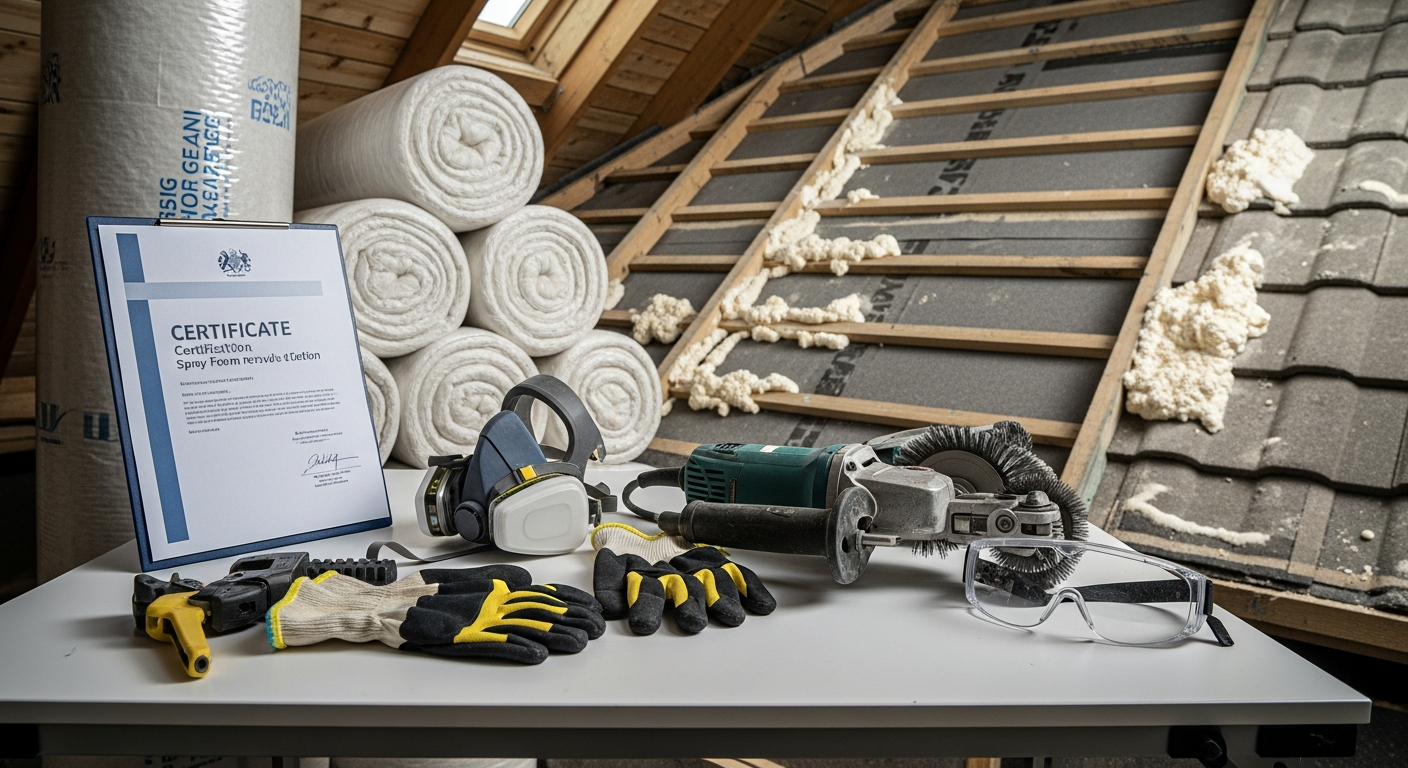
Understanding Spray Foam Removal Certification
When you discover problematic spray foam insulation in your property, choosing the right contractor to remove it safely isn't just about finding someone...
Understanding Spray Foam Removal Certification
When you discover problematic spray foam insulation in your property, choosing the right contractor to remove it safely isn’t just about finding someone with the tools. Proper certification for foam removal work ensures the job is done safely, legally, and to industry standards. With spray foam insulation containing potentially hazardous chemicals and requiring specialist handling techniques, understanding what certification means — and why it matters — could save you from costly mistakes and health risks.
What Makes Foam Removal Certification Essential
Spray foam removal isn’t a standard demolition job. The polyurethane chemicals used in spray foam can release toxic fumes when disturbed, particularly if the original installation was faulty or the foam has degraded over time. Certified removal specialists understand these risks and know how to mitigate them.
A qualified contractor holds certification that demonstrates their understanding of hazardous material handling, proper containment procedures, and safe removal techniques. This isn’t just about having the right equipment — though that’s crucial too. It’s about understanding when full containment is needed, how to protect adjacent areas, and what disposal methods comply with UK regulations.
The certification process typically covers respiratory protection, chemical safety, waste classification, and emergency procedures. Without this knowledge, a removal job can quickly turn dangerous, spreading contamination throughout your home or failing to properly dispose of hazardous waste.
Industry Standards and Training Requirements
In the UK, spray foam removal falls under several regulatory frameworks. Contractors typically need training in the Control of Substances Hazardous to Health (COSHH) regulations, which govern how hazardous materials are handled and removed. Many also pursue additional qualifications in hazardous waste removal and respiratory protection.
The most comprehensive programmes cover risk assessment, containment strategies, personal protective equipment selection, air monitoring, and waste segregation. Contractors learn to identify different foam types, understand their chemical compositions, and select appropriate removal methods for each situation.
Professional certification also includes ongoing education requirements. As foam formulations evolve and new safety data emerges, certified contractors stay updated on best practices. This continuous learning approach means they’re equipped to handle both older foam installations and newer formulations safely.
Red Flags When Choosing Removal Contractors
Not all contractors advertising foam removal services have proper certification. Some warning signs include reluctance to discuss their qualifications, inability to provide certification documents, or quotes that seem unusually low compared to certified specialists.
Uncertified contractors often underestimate the complexity of foam removal. They might suggest simple scraping or cutting methods without proper containment, skip essential safety equipment, or fail to properly classify and dispose of waste materials. These shortcuts can leave you with incomplete removal, contaminated air, or regulatory compliance issues.
A properly certified contractor will conduct a thorough assessment before quoting, explain their containment and removal approach, and provide clear documentation of their qualifications. They’ll also discuss disposal methods and provide waste transfer documentation, ensuring full compliance with environmental regulations.
How Certification Protects Your Property Investment
Beyond immediate safety concerns, proper certification protects your long-term property interests. Incorrectly removed foam can leave residues that continue to off-gas, create ongoing air quality issues, or fail mortgage surveys and insurance inspections.
Certified contractors understand how complete removal affects subsequent insulation or building work. They know which removal methods preserve structural integrity and which substrates require special attention. This expertise prevents damage that could cost thousands to rectify later.
The documentation provided by certified contractors also adds value to your property records. Complete removal certificates, waste disposal documentation, and air quality testing results demonstrate due diligence to future buyers or insurance providers. Our spray foam removal certification service ensures all necessary documentation is provided, giving you complete peace of mind about the work completed.
Key Takeaways
- Proper foam removal certification demonstrates understanding of hazardous material handling and safety protocols
- UK contractors should hold COSHH training and additional qualifications in hazardous waste removal
- Uncertified contractors often underestimate complexity, potentially creating safety risks and compliance issues
- Certified removal protects both immediate safety and long-term property value through proper documentation
- Complete removal certificates and waste disposal records provide valuable property documentation for future reference
What Our Customers Say
Trusted by homeowners across Nationwide (Based in Southampton) — here's what they have to say.
"Brilliant service from start to finish. The team were professional, tidy, and explained everything clearly. Our energy bills have dropped noticeably since the new insulation went in."
"Had spray foam removed and mineral wool installed. The inspector was thorough and honest about what needed doing. Really impressed with the quality of work."
"We had terrible condensation in our loft. They diagnosed the problem quickly, improved the ventilation, and replaced the old insulation. No more damp and the house is noticeably warmer."
Frequently Asked Questions
Ask to see their certification documents directly and verify them with the issuing body. Legitimate contractors will readily provide proof of their qualifications and explain their training background.
Certified contractors typically charge more than uncertified operators, but this reflects proper safety equipment, insurance coverage, and compliant disposal methods that protect you from future liability.
Improper removal can create health hazards, leave contaminated materials, result in regulatory breaches, and potentially void property insurance or affect future sales. --- If you're dealing with problematic spray foam insulation, don't take chances with uncertified removal. Contact our team to discuss your requirements and ensure the work is completed safely and legally.
Ready for a Free Survey?
No obligation. We assess your property and provide a detailed quote — usually within 48 hours.