
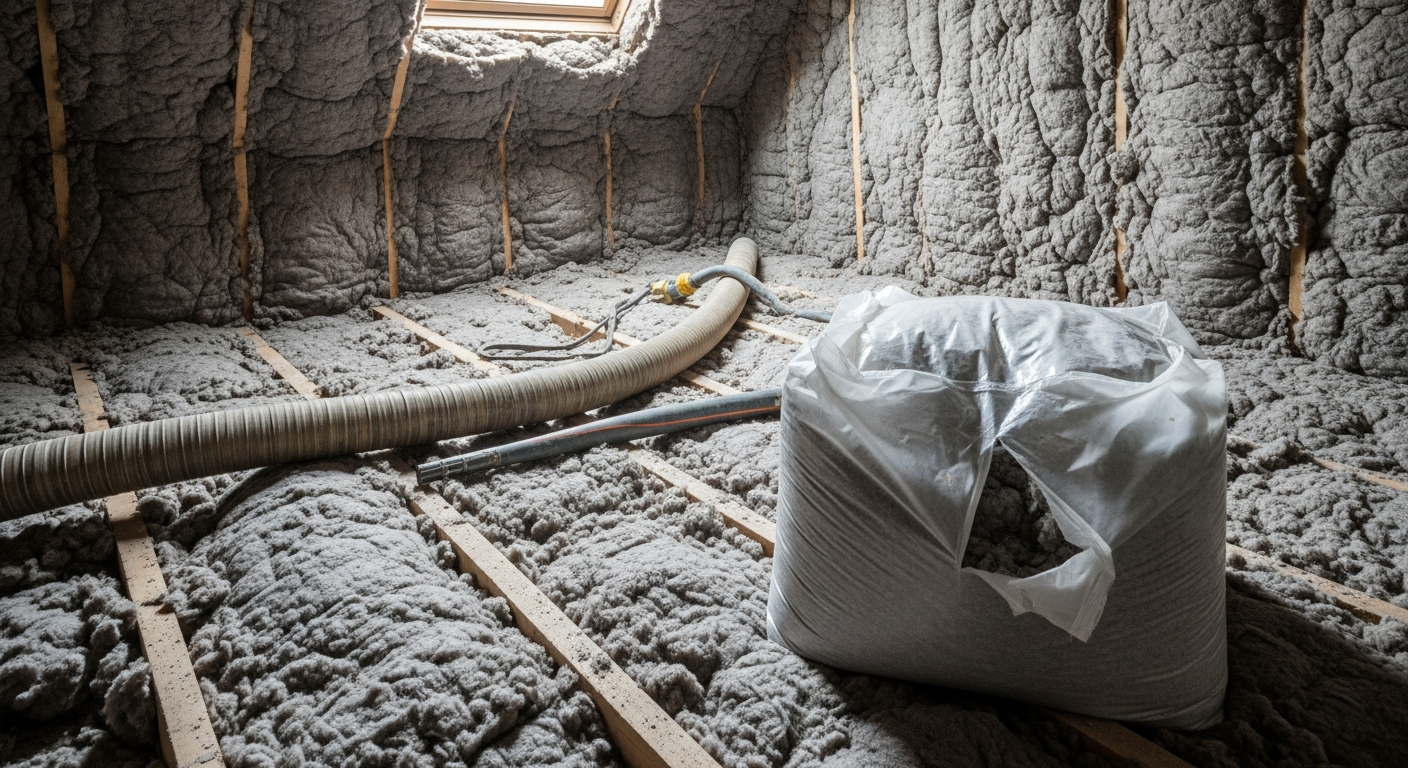
Is Cellulose Insulation Right for Your Home?
When you're considering loft insulation options, cellulose often gets overlooked in favour of more familiar materials like glass wool or rigid boards. Yet...
Is Cellulose Insulation Right for Your Home?
When you’re considering loft insulation options, cellulose often gets overlooked in favour of more familiar materials like glass wool or rigid boards. Yet this recycled newspaper-based insulation has been quietly gaining ground among environmentally conscious homeowners and energy efficiency experts alike. Made from up to 85% recycled content and treated with fire-retardant borates, cellulose offers a compelling combination of thermal performance, eco-credentials, and practical benefits. But like any building material, it’s not suitable for every situation or every home.
The Environmental and Performance Benefits
Cellulose insulation stands out for its impressive green credentials. The manufacturing process requires roughly 90% less energy than fibreglass production, whilst the recycled newspaper content diverts thousands of tonnes of waste from landfills annually. From a performance standpoint, cellulose typically achieves thermal conductivity values between 0.038-0.040 W/mK, making it comparable to other blown insulation materials.
The dense-packed nature of professionally installed cellulose creates excellent air sealing properties. Unlike batt insulation that can leave gaps around joists and penetrations, blown cellulose fills every nook and cranny, reducing thermal bridging and air leakage. This comprehensive coverage often translates to lower heating bills than you might expect from the thermal conductivity figures alone.
We’ve found that cellulose performs particularly well in older properties with irregular joist spacing or numerous penetrations through the ceiling. The material conforms naturally to odd-shaped spaces that would be challenging to insulate with rigid materials or pre-cut batts.
Understanding the Practical Considerations
Moisture management deserves careful consideration with cellulose insulation. The material can absorb moisture without immediately losing its insulating properties, but prolonged exposure to damp conditions will eventually cause settling and reduced performance. Proper ventilation becomes crucial—you need adequate eaves ventilation and potentially ridge vents to maintain healthy airflow through the loft space.
Installation quality significantly affects long-term performance. When we carry out cellulose installations through our blown-in cellulose loft insulation service, we ensure consistent density throughout the loft area. Under-blown areas can settle over time, creating thermal bridges, whilst over-blown sections waste material and may impede ventilation.
The fire-retardant treatment in quality cellulose products provides good fire resistance, but this depends entirely on proper treatment levels. Building Regulations Part B requirements for reaction to fire are typically met, but always verify that your chosen product carries appropriate certifications for UK construction use.
Cost Analysis and Long-term Value
Initial installation costs for cellulose typically fall between mineral wool and more premium eco-insulation options. However, the real value lies in the comprehensive coverage achievable with blown application. You’re paying for material and installation, but you’re getting superior air sealing that’s difficult to achieve with other insulation types without additional measures.
Energy savings often exceed expectations due to the air sealing properties. Whilst the thermal conductivity might be similar to other materials, the reduction in draughts and thermal bridging frequently results in more comfortable living spaces and lower heating demands. The Carbon Trust suggests that comprehensive loft insulation can reduce household heating costs by 15-25%, with well-sealed installations at the higher end of this range.
Durability varies depending on installation conditions and moisture management. In dry, well-ventilated lofts, cellulose maintains its properties for decades. However, if moisture problems develop, cellulose can compress and lose effectiveness more readily than synthetic alternatives.
Making the Right Choice for Your Property
Cellulose works best in specific circumstances. It’s particularly suitable for older homes with traditional construction, irregular joist layouts, or where eco-credentials matter significantly to the homeowner. The material excels in lofts where comprehensive air sealing is a priority and where proper ventilation can be maintained.
However, cellulose isn’t ideal for every situation. Properties with ongoing moisture issues, inadequate ventilation, or very low loft spaces where maintenance access is limited might benefit from alternative approaches. Similarly, if you’re planning extensive loft conversion work in the future, other insulation types might prove more practical.
Consider your local climate conditions as well. In areas prone to driving rain or high humidity, the moisture management requirements become more critical, potentially making synthetic alternatives more suitable despite their environmental drawbacks.
Key Takeaways
• Cellulose offers excellent environmental credentials with 85% recycled content and low embodied energy • Superior air sealing properties often deliver better real-world performance than thermal conductivity figures suggest • Moisture management and ventilation are critical for long-term performance and durability • Installation quality significantly affects outcomes—professional installation ensures proper density and coverage • Best suited to older properties, irregular spaces, and situations where eco-credentials are important
What Our Customers Say
Trusted by homeowners across Nationwide (Based in Southampton) — here's what they have to say.
"Brilliant service from start to finish. The team were professional, tidy, and explained everything clearly. Our energy bills have dropped noticeably since the new insulation went in."
"Had spray foam removed and mineral wool installed. The inspector was thorough and honest about what needed doing. Really impressed with the quality of work."
"We had terrible condensation in our loft. They diagnosed the problem quickly, improved the ventilation, and replaced the old insulation. No more damp and the house is noticeably warmer."
Frequently Asked Questions
In properly ventilated, dry conditions, cellulose insulation typically maintains its effectiveness for 20-30 years or more. The key factors are moisture control and initial installation quality—well-installed cellulose in suitable conditions can last as long as the building itself.
Cellulose can absorb and release moisture vapour, which actually helps moderate humidity levels when ventilation is adequate. Problems arise when ventilation is insufficient or when bulk water enters the loft space—proper ventilation design prevents most condensation issues.
Cellulose performs well across the UK, but requires more attention to ventilation design in high-rainfall areas like Scotland and western regions. The material's moisture-handling characteristics work effectively when proper vapour control and ventilation strategies are employed.
Ready for a Free Survey?
No obligation. We assess your property and provide a detailed quote — usually within 48 hours.