
Loft Storage Ideas: Boarding Over Insulation Safely
Converting your loft into proper storage space requires careful planning to avoid damaging existing insulation or compromising your home's thermal...
Loft Storage Ideas: Boarding Over Insulation Safely
Converting your loft into proper storage space requires careful planning to avoid damaging existing insulation or compromising your home’s thermal efficiency. Many homeowners make costly mistakes by simply laying boards directly over their insulation, crushing expensive materials and creating cold spots. Understanding the right approach to boarding over insulation ensures you get usable storage whilst maintaining energy performance and avoiding moisture problems that can damage both your stored belongings and the structure itself.
Why Standard Boarding Crushes Your Investment
Most UK homes built or retrofitted in the last two decades have thick insulation layers between the joists — typically 270mm or more of mineral wool or glass fibre. This depth creates excellent thermal performance, but presents a challenge when you want to add storage.
Placing boards directly onto this insulation compresses the material, dramatically reducing its effectiveness. Insulation works by trapping air within its fibres, and compression forces this air out, destroying the thermal barrier. What started as high-performance 270mm insulation can become virtually useless when compressed to 50mm under storage boards.
The thermal bridging created by compressed areas allows heat to escape through the roof, increasing your energy bills and potentially causing condensation problems. During winter, warm air hitting cold spots can create moisture that damages stored items and encourages mould growth on timber surfaces.
We regularly survey lofts where homeowners have unknowingly created these problems. The solution isn’t to avoid loft storage — it’s to install it properly from the start.
The Raised Platform Approach
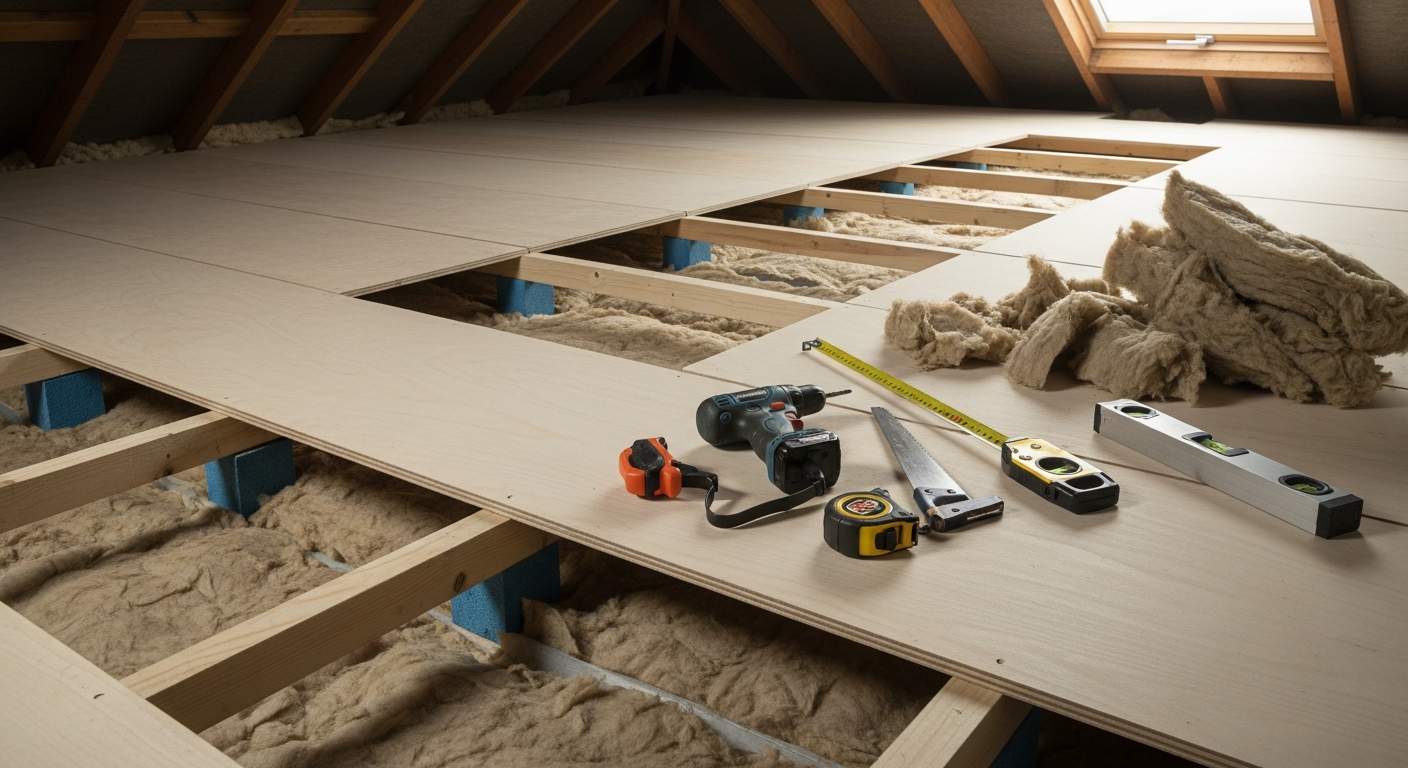
Professional loft boarding systems use raised platforms that sit above your existing insulation, preserving its full thickness and effectiveness. This approach requires additional timber framework, typically 75mm to 100mm battens, that creates a level surface above the insulation layer.
The framework spans between the existing joists without compressing the insulation below. This maintains the thermal barrier whilst providing a solid foundation for storage boards. Quality installations include ventilation gaps to prevent moisture buildup and ensure proper airflow throughout the loft space.
Building Regulations often apply when creating substantial storage areas, particularly if you’re adding significant structural loading or fixed access. Professional installations ensure compliance with current standards whilst maximising your available storage capacity.
Our raised loft boarding for storage service addresses these technical requirements, creating usable space without compromising your home’s thermal performance or structural integrity.
Planning Your Storage Layout Effectively
Successful loft storage begins with understanding your space and requirements. Map out areas where you can walk safely, considering the headroom available and the location of water tanks, electrical cables, or existing ventilation systems.
Heavy items need support directly over load-bearing walls or properly strengthened joist areas. Modern storage solutions can include reinforcement where needed, but planning prevents expensive modifications later. Consider access routes too — narrow loft hatches limit what you can store, regardless of floor space available.
Partition your storage into zones: frequently accessed items near the entrance, seasonal storage in deeper areas, and heavy items over structural points. Leave clear pathways for maintenance access to boilers, water systems, or electrical components that may need attention.
Professional surveys identify these factors before installation begins, ensuring your finished storage works practically for your specific needs and property layout.
Maintaining Safety and Building Standards
Loft storage installations must meet current building standards for structural loading, fire safety, and thermal performance. The additional weight of storage boards, framework, and stored items can exceed the design capacity of older roof structures.
Structural calculations determine whether existing joists can handle the increased loading or need reinforcement. This becomes particularly important in older properties where timber sizes may be smaller than modern standards require.
Electrical safety requires careful planning around existing cables and lighting circuits. New installations often need additional lighting and power points, which must comply with Part P of the Building Regulations and be installed by qualified electricians.
Fire safety considerations include maintaining escape routes and ensuring stored materials don’t create fire hazards. Proper ventilation prevents condensation that could damage stored items or create conditions favouring timber decay.
Professional installations address these requirements systematically, ensuring your loft storage is both safe and compliant with current standards.
Key Takeaways
• Never place boards directly onto thick insulation — compression destroys thermal performance and wastes your investment in energy efficiency • Raised platforms preserve insulation effectiveness whilst creating solid storage surfaces above the existing thermal layer • Plan storage layouts carefully, considering structural loading, access requirements, and maintenance needs for existing services • Building Regulations may apply to substantial loft conversions — professional advice ensures compliance and safety • Proper ventilation and electrical planning prevent moisture problems and ensure safe access to your stored belongings
What Our Customers Say
Trusted by homeowners across Nationwide (Based in Southampton) — here's what they have to say.
"Brilliant service from start to finish. The team were professional, tidy, and explained everything clearly. Our energy bills have dropped noticeably since the new insulation went in."
"Had spray foam removed and mineral wool installed. The inspector was thorough and honest about what needed doing. Really impressed with the quality of work."
"We had terrible condensation in our loft. They diagnosed the problem quickly, improved the ventilation, and replaced the old insulation. No more damp and the house is noticeably warmer."
Frequently Asked Questions
Yes, but only with a raised platform system that doesn't compress the insulation. Direct boarding crushes the material and destroys its effectiveness, potentially increasing your heating bills significantly whilst creating condensation risks.
This depends on the extent of work and structural changes involved. Simple storage boarding may not require approval, but substantial installations with reinforcement or permanent stairs typically do. Professional assessment determines what's needed for your specific project.
This varies dramatically between properties and depends on joist sizes, spacing, and condition. Most domestic lofts are designed for minimal loading, so professional structural assessment is essential before adding significant storage capacity or heavy items. Ready to create proper loft storage that works with your insulation, not against it? We'll survey your space and recommend the right approach for your property and storage needs. Contact us to arrange your consultation and get your loft working harder for you.
Ready for a Free Survey?
No obligation. We assess your property and provide a detailed quote — usually within 48 hours.