
Open Cell vs Closed Cell Spray Foam: Key Differences
When you're researching insulation options for your home, spray foam often comes up as a high-performance choice. But there's more than one type to...
Open Cell vs Closed Cell Spray Foam: Key Differences
When you’re researching insulation options for your home, spray foam often comes up as a high-performance choice. But there’s more than one type to consider. Open cell and closed cell spray foam might sound like technical jargon, but understanding the differences between them can save you money and ensure you get the right insulation for your specific needs. Whether you’re insulating a loft, sealing gaps around windows, or tackling a full renovation project, knowing which foam works best in different situations helps you make an informed decision about your property’s thermal performance.
Understanding the Basic Structure
The fundamental difference between open cell and closed cell spray foam lies in their cellular structure, which affects everything from insulation performance to cost.
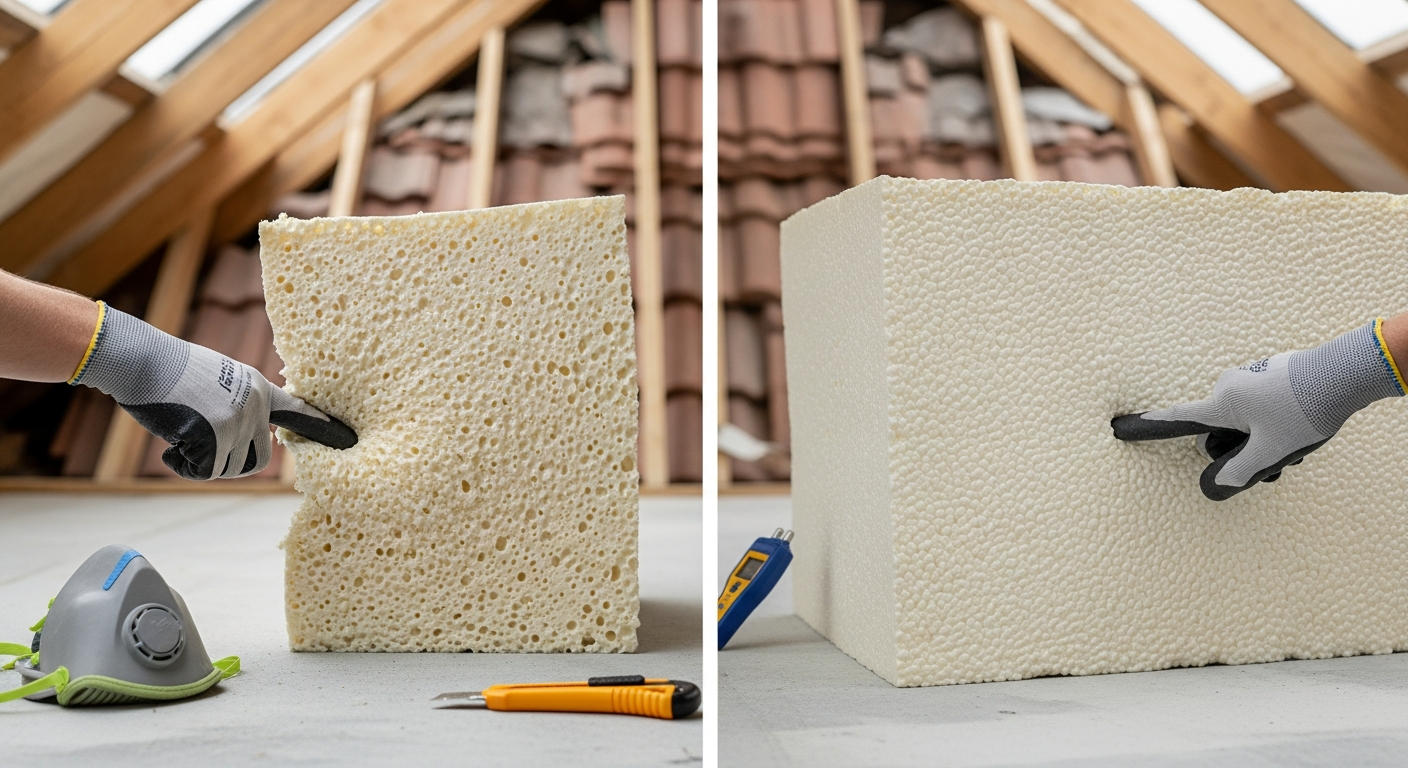
Open cell spray foam has a spongy texture with interconnected air pockets throughout the material. These open cells allow air to move through the foam, making it softer and more flexible once cured. The density is typically around 0.5 pounds per cubic foot, which makes it lighter and more affordable than its closed cell counterpart.
Closed cell spray foam, by contrast, has a rigid structure where each cell is completely sealed off from its neighbours. This creates a much denser material — usually around 2 pounds per cubic foot — that feels solid to the touch once it’s dried. The sealed structure gives it superior strength and creates an excellent barrier against both air and moisture.
We’ve installed both types across countless homes throughout the UK, and the cellular structure difference becomes obvious when you see them side by side. Open cell foam compresses easily under pressure, whilst closed cell foam maintains its rigid form even when you press firmly against it.
Insulation Performance and R-Values
The R-value measures how well a material resists heat transfer — higher numbers mean better insulation. This is where the two foam types show distinct characteristics that matter for your energy bills.
Open cell spray foam typically provides an R-value of around 3.6 to 4.2 per inch of thickness. Whilst this is lower than closed cell foam, it still outperforms many traditional insulation materials like fibreglass batts or mineral wool. The open structure allows the foam to expand significantly during application, often filling gaps and crevices that other materials might miss.
Closed cell spray foam delivers a higher R-value of approximately 6.0 to 7.0 per inch. This superior thermal resistance means you need less thickness to achieve the same insulation performance. In spaces where every inch counts — such as between roof rafters or in cavity walls — this efficiency can be particularly valuable.
However, R-value isn’t the complete picture. Open cell foam’s ability to expand and conform to irregular surfaces often provides better coverage in practice, potentially offsetting its lower per-inch performance through more comprehensive coverage of thermal bridges and air leaks.
Moisture Behaviour and Breathability
How each foam type handles moisture can significantly impact your home’s long-term health, particularly in the UK’s damp climate.
Open cell spray foam is vapour permeable, meaning moisture can pass through it gradually. This breathability can be beneficial in roof spaces and walls where you want to avoid trapping moisture that could lead to condensation problems. However, this permeability also means it won’t act as a vapour barrier on its own — you might need additional moisture management strategies.
Closed cell spray foam creates an excellent vapour barrier due to its sealed cellular structure. Water vapour cannot penetrate through properly installed closed cell foam, making it ideal for areas where moisture control is critical. This characteristic makes it particularly suitable for basement applications or areas where you’re dealing with potential water ingress.
When we encounter properties where previous spray foam installation has caused moisture issues — situations that require our closed cell and open cell spray foam removal services — it’s often because the wrong type was chosen for the specific application or building requirements.
Cost Considerations and Application Areas
The price difference between these foam types reflects their material costs and installation complexity, but the right choice depends on your specific requirements.
Open cell foam typically costs 30-50% less than closed cell foam per board foot. This makes it attractive for larger areas like loft spaces where you’re covering significant square footage. The lower density also means it goes further during application, stretching your budget when insulating bigger areas.
Closed cell foam commands a premium price, but its superior R-value means you achieve better insulation performance with less material thickness. In applications where space is limited or where you need the structural benefits and moisture resistance, the extra cost often proves worthwhile.
For most UK homes, open cell foam works well in roof voids and interior walls where moisture isn’t a primary concern. Closed cell foam excels in basements, foundations, and areas where you need both insulation and moisture control in one application.
Key Takeaways
• Open cell foam costs less and provides good insulation with natural breathability, making it suitable for most interior applications • Closed cell foam offers superior R-value per inch and creates an excellent vapour barrier, ideal for moisture-prone areas • The cellular structure determines performance — open cells allow air movement, closed cells block both air and moisture completely • Your specific application should drive the choice — consider space constraints, moisture levels, and budget when deciding • Professional assessment helps identify which type best suits your property’s unique requirements and building characteristics
What Our Customers Say
Trusted by homeowners across Nationwide (Based in Southampton) — here's what they have to say.
"Brilliant service from start to finish. The team were professional, tidy, and explained everything clearly. Our energy bills have dropped noticeably since the new insulation went in."
"Had spray foam removed and mineral wool installed. The inspector was thorough and honest about what needed doing. Really impressed with the quality of work."
"We had terrible condensation in our loft. They diagnosed the problem quickly, improved the ventilation, and replaced the old insulation. No more damp and the house is noticeably warmer."
Frequently Asked Questions
Yes, many homes benefit from using different foam types in different areas. We often install open cell foam in loft spaces for cost-effective coverage whilst using closed cell foam in basements or areas requiring moisture control. The key is matching each foam type to the specific requirements of each location.
Both types can last decades when properly installed, but closed cell foam typically has better longevity in moisture-prone areas due to its impermeable structure. Open cell foam performs well in dry conditions but may degrade faster if repeatedly exposed to moisture cycles common in poorly ventilated spaces.
Closed cell foam adheres more strongly to surfaces and is denser, making removal more challenging if ever needed. Open cell foam, whilst still requiring professional removal, is generally softer and can be easier to extract. Both types require specialist techniques and equipment for safe removal if building alterations are needed later. Ready to determine which spray foam type suits your property best? Contact our experienced team for a detailed assessment of your insulation needs and professional installation guidance.
Ready for a Free Survey?
No obligation. We assess your property and provide a detailed quote — usually within 48 hours.