
How Dry Ice Blasting Removes Spray Foam Safely
Removing old or incorrectly applied spray foam insulation can be a nightmare using traditional methods. Mechanical scraping damages surfaces, chemical...
How Dry Ice Blasting Removes Spray Foam Safely
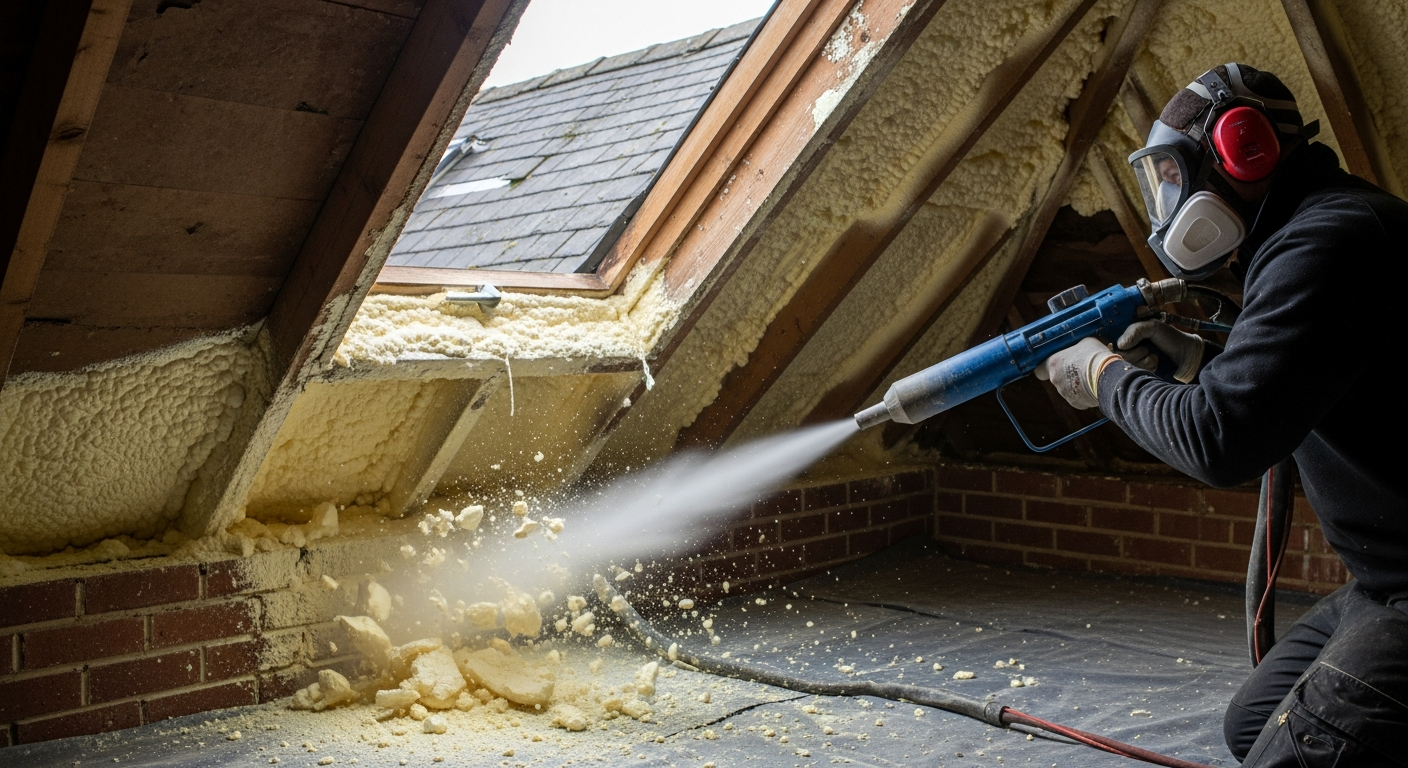
Removing old or incorrectly applied spray foam insulation can be a nightmare using traditional methods. Mechanical scraping damages surfaces, chemical solvents create hazardous fumes, and heat-based removal risks fire damage. Dry ice blasting offers a revolutionary approach that removes polyurethane foam completely without harming the underlying structure. We’ve used this process extensively across the UK, and it’s transformed how we approach foam removal projects that would have been nearly impossible just a few years ago.
Understanding the Cryogenic Cleaning Process
The dry ice blasting process works by firing frozen CO₂ pellets at -78.5°C through a pressurised nozzle. When these pellets hit the spray foam, three things happen simultaneously. The extreme cold causes the foam to become brittle and contract rapidly. The kinetic energy from the pellets breaks the weakened foam away from the substrate. Finally, the dry ice sublimates instantly back to gas form, taking foam particles with it and leaving no secondary waste behind.
Unlike sandblasting or chemical stripping, this method doesn’t introduce abrasive materials or toxic substances to your property. The CO₂ used is reclaimed from industrial processes, making it environmentally responsible. We’ve found this particularly valuable when working in occupied homes or near sensitive areas like gardens where chemical runoff would be problematic.
Why Temperature Makes All the Difference
Spray foam’s polymer structure becomes dramatically more fragile when subjected to extreme cold. At normal temperatures, polyurethane foam maintains its flexibility and strong adhesion to surfaces. But when exposed to dry ice temperatures, the molecular bonds contract and become brittle within seconds.
This temperature differential is crucial for clean removal. The foam essentially shatters away from surfaces rather than requiring aggressive scraping or grinding. We’ve successfully removed foam from delicate timber beams, brick walls, and even around electrical installations where other methods would cause expensive damage. The process works equally well on both open-cell and closed-cell foam types, though closed-cell varieties sometimes require slightly longer exposure times.
Precision Control for Different Surfaces
Modern dry ice blasting equipment allows precise adjustment of pressure, pellet size, and blast patterns. For soft surfaces like timber joists, we use lower pressures with smaller pellets to avoid any surface marking. Concrete or steel structures can handle higher pressures that speed up the removal process significantly.
The equipment we use includes variable pressure controls ranging from 30 to 300 PSI, allowing us to match the blast intensity to each specific situation. Pellet sizes typically range from 1mm to 4mm diameter. Smaller pellets provide gentler action for detailed work around fixtures, while larger pellets remove thick foam deposits more efficiently from open areas.
Environmental and Safety Advantages
One of the biggest advantages of cryogenic foam removal is the complete absence of chemical waste. Traditional removal methods often require disposal of contaminated solvents, scraped debris mixed with hazardous chemicals, or abrasive materials that have absorbed foam particles. With dry ice blasting, the only waste product is the removed foam itself, which can often be recycled or disposed of as standard construction waste.
The process also eliminates exposure risks for building occupants. No toxic fumes are generated, and there’s no risk of chemical residues remaining in the building fabric. This makes it particularly suitable for schools, hospitals, or homes where vulnerable people might be affected by traditional removal methods. Our dry ice blasting for foam removal service has helped numerous families stay in their homes during renovation work that would otherwise require temporary relocation.
Key Takeaways
• Dry ice blasting uses extreme cold (-78.5°C) to make spray foam brittle and break its bond with surfaces • The process creates no secondary waste as dry ice sublimates back to harmless CO₂ gas • Pressure and pellet size can be adjusted for different surfaces, from delicate timber to robust masonry • Environmental impact is minimal with no chemical waste or toxic residues • The method works effectively on both open-cell and closed-cell polyurethane foam types
What Our Customers Say
Trusted by homeowners across Nationwide (Based in Southampton) — here's what they have to say.
"Brilliant service from start to finish. The team were professional, tidy, and explained everything clearly. Our energy bills have dropped noticeably since the new insulation went in."
"Had spray foam removed and mineral wool installed. The inspector was thorough and honest about what needed doing. Really impressed with the quality of work."
"We had terrible condensation in our loft. They diagnosed the problem quickly, improved the ventilation, and replaced the old insulation. No more damp and the house is noticeably warmer."
Frequently Asked Questions
When performed correctly with appropriate pressure settings, dry ice blasting won't damage properly maintained surfaces. We adjust equipment parameters based on the substrate material, and our operators are trained to recognise when surfaces might be vulnerable to the process.
Dry ice blasting is typically 3-5 times faster than mechanical scraping and doesn't require the preparation time needed for chemical treatments. Most residential foam removal projects are completed in 1-2 days rather than the week or more required by conventional methods.
The CO₂ produced is no different from what we exhale naturally, but we ensure adequate ventilation during the work. The gas dissipates quickly in normal atmospheric conditions, and we use monitoring equipment to maintain safe working conditions throughout the project. Ready to remove problematic spray foam without the mess and hazards of traditional methods? Contact us to discuss your foam removal project and arrange a survey. We'll assess your specific situation and explain exactly how our process will restore your surfaces safely and efficiently.
Ready for a Free Survey?
No obligation. We assess your property and provide a detailed quote — usually within 48 hours.