
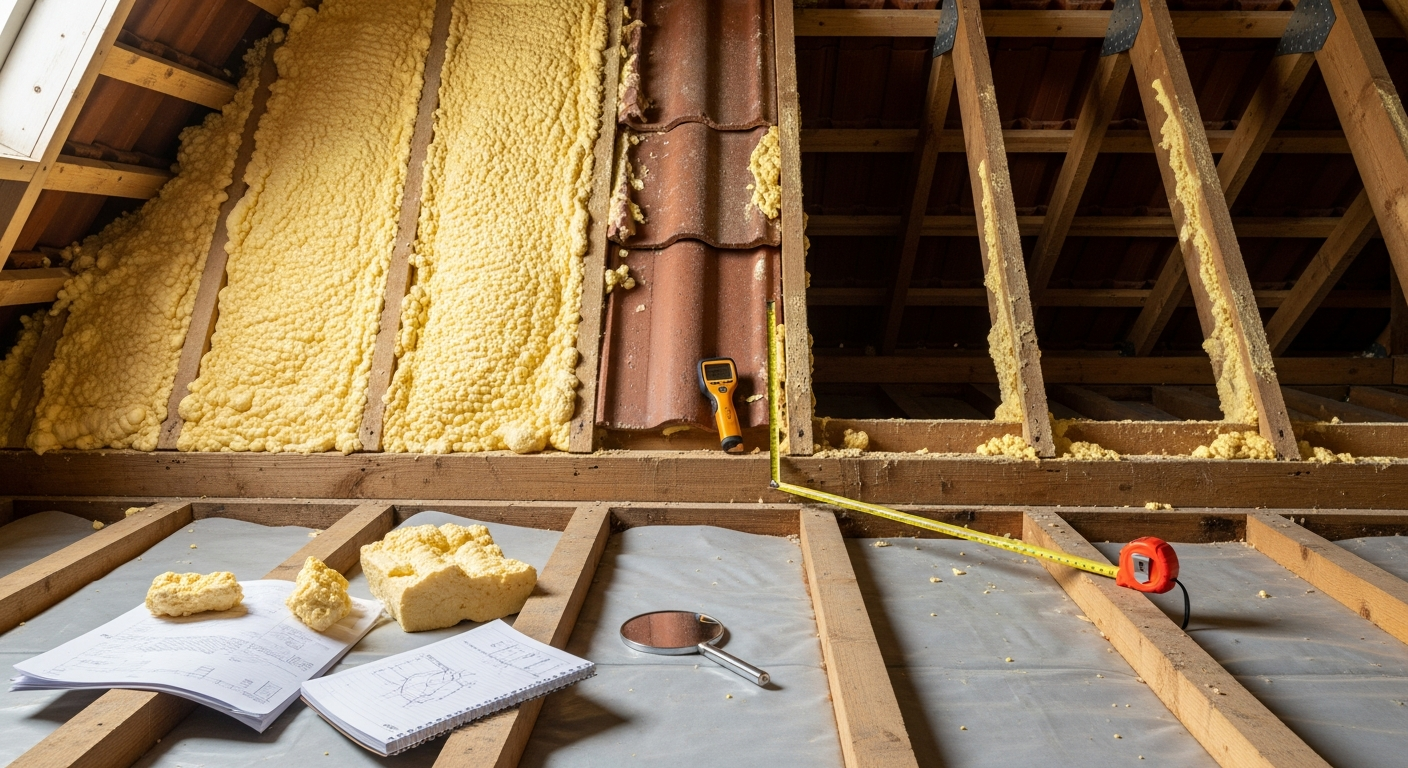
Spray Foam & Equity Release: What Surveyors Look For
When you're considering equity release, your surveyor's assessment can make or break the deal. Spray foam insulation has become a particular concern for...
Spray Foam & Equity Release: What Surveyors Look For
When you’re considering equity release, your surveyor’s assessment can make or break the deal. Spray foam insulation has become a particular concern for many lenders and surveyors, potentially affecting your ability to unlock the equity in your home. Understanding what triggers their caution — and what they’re specifically looking for during their inspection — helps you prepare for this crucial stage of the process.
How Surveyors Assess Properties with Spray Foam
During an equity release survey, the surveyor examines every aspect of your property’s condition and construction. When they encounter spray foam insulation, their assessment becomes more detailed and cautious.
The surveyor will first determine whether the foam was applied to an open or closed-cell specification. Open-cell foam allows moisture to pass through, whilst closed-cell creates a vapour barrier. They’ll also check if the foam was installed over the rafters (creating a warm roof) or between them, as this affects ventilation requirements.
Professional installation records become crucial evidence. We’ve found that homeowners with proper certification and warranties face fewer complications during surveys. The surveyor wants to see that the work met Building Regulations and was carried out by certified installers using appropriate materials.
Most importantly, they’re looking for signs of moisture problems. Condensation, timber decay, or structural issues linked to poor ventilation can significantly impact the property’s valuation and mortgage viability.
Red Flags That Concern Mortgage Lenders
Certain spray foam installations immediately raise concerns during equity release surveys. Poorly installed foam that blocks natural ventilation creates an environment where moisture becomes trapped, potentially leading to timber rot and structural problems.
The surveyor will be particularly concerned if the foam was applied directly to roof tiles without adequate ventilation provision. This creates what’s known as a “cold roof” configuration, which can cause condensation to form on the underside of the tiles.
Incomplete coverage presents another red flag. Patchy application or areas where the foam has pulled away from surfaces suggest either poor installation or material failure. These gaps can create thermal bridges and moisture ingress points.
Age and type of foam matter significantly. Older installations, particularly those from the 1980s and 1990s, often used materials that are now known to cause problems. Some early formulations were more prone to shrinkage or contained chemicals that could affect indoor air quality.
Documentation gaps also concern lenders. Without proper installation certificates, Building Control approval, or manufacturer warranties, the surveyor cannot verify that the work met appropriate standards.
Meeting Modern Building Standards and Expectations
Today’s Building Regulations require specific approaches to insulation and ventilation. When spray foam is involved, compliance becomes more complex, and surveyors know what to look for.
The current standards emphasise continuous insulation with proper vapour control. Spray foam can achieve this when correctly specified and installed, but the surveyor needs evidence that the installation meets these requirements. They’ll check for adequate thickness, proper sealing at joints, and appropriate material specifications.
Ventilation provision receives particular scrutiny. Modern standards require controlled ventilation to maintain indoor air quality while preventing condensation. The surveyor will assess whether the spray foam installation has compromised the property’s ability to achieve this balance.
Energy efficiency certificates and SAP calculations may also factor into their assessment. Properties with spray foam should demonstrate improved thermal performance, and the surveyor may reference these documents to verify the installation’s effectiveness.
Insurance implications often arise during surveys. Some insurers have specific exclusions or requirements regarding spray foam, and the surveyor may flag this as a condition of their valuation.
Professional Remediation Options
When survey concerns arise, homeowners have several options to address the issues. Our spray foam removal for equity release service specifically addresses these mortgage and survey complications by safely removing problematic installations and restoring proper roof ventilation.
Complete removal might be necessary if the foam has caused structural issues or cannot be modified to meet current standards. This process requires specialist equipment and expertise to avoid damaging the underlying roof structure.
Alternatively, some installations can be modified rather than completely removed. This might involve creating ventilation channels, applying vapour barriers, or upgrading specific areas to meet current requirements.
The surveyor’s specific concerns guide the remediation approach. Understanding exactly what they’ve identified helps determine whether partial modification or complete removal offers the most cost-effective solution.
Working with experienced professionals ensures that any remediation work addresses not just the immediate survey concerns but also prevents future problems that could affect your property’s value or mortgageability.
Key Takeaways
• Surveyors examine spray foam installations for compliance, moisture control, and structural impact during equity release assessments • Poor ventilation, incomplete coverage, and missing documentation are primary red flags that concern mortgage lenders • Modern Building Regulations require specific approaches to insulation and ventilation that older installations may not meet • Professional assessment can determine whether modification or removal offers the best solution for mortgage approval • Proper remediation addresses both immediate survey concerns and long-term property value protection
What Our Customers Say
Trusted by homeowners across Nationwide (Based in Southampton) — here's what they have to say.
"Brilliant service from start to finish. The team were professional, tidy, and explained everything clearly. Our energy bills have dropped noticeably since the new insulation went in."
"Had spray foam removed and mineral wool installed. The inspector was thorough and honest about what needed doing. Really impressed with the quality of work."
"We had terrible condensation in our loft. They diagnosed the problem quickly, improved the ventilation, and replaced the old insulation. No more damp and the house is noticeably warmer."
Frequently Asked Questions
Not necessarily. The surveyor's main concern is whether the installation meets current standards and hasn't caused structural problems. Well-installed foam with proper documentation and warranties typically causes fewer issues than poorly installed systems.
The foam inspection usually adds 30-60 minutes to a standard survey. However, if the surveyor identifies concerns, they may recommend a specialist structural survey, which can take several additional hours and delay your application.
Yes, most lenders will accept an updated survey following professional remediation work. You'll need to provide evidence that the work addressed the original concerns and restored the property to acceptable standards for lending purposes. --- **Concerned about how spray foam might affect your equity release plans?** We provide detailed assessments and professional remediation services to address surveyor concerns and keep your application on track. Contact us for a no-obligation consultation about your specific situation.
Ready for a Free Survey?
No obligation. We assess your property and provide a detailed quote — usually within 48 hours.