
Will Spray Foam Affect My Mortgage?
If you're considering spray foam insulation or already have it in your property, mortgage implications might not be your first concern. But they should...
Will Spray Foam Affect My Mortgage?
If you’re considering spray foam insulation or already have it in your property, mortgage implications might not be your first concern. But they should be. Across the UK, lenders are increasingly cautious about properties with spray foam insulation, particularly in roof spaces. What seemed like an energy-efficient upgrade could become a significant hurdle when you need to remortgage, sell, or even secure buildings insurance. Understanding these challenges early can save you thousands and prevent deals falling through at the worst possible moment.
Why Lenders Are Concerned About Spray Foam
Mortgage lenders aren’t being awkward for the sake of it. Their concerns stem from genuine structural and practical issues that spray foam can create. When installed incorrectly, spray foam can trap moisture within roof timbers, leading to rot and structural damage that’s expensive to repair.
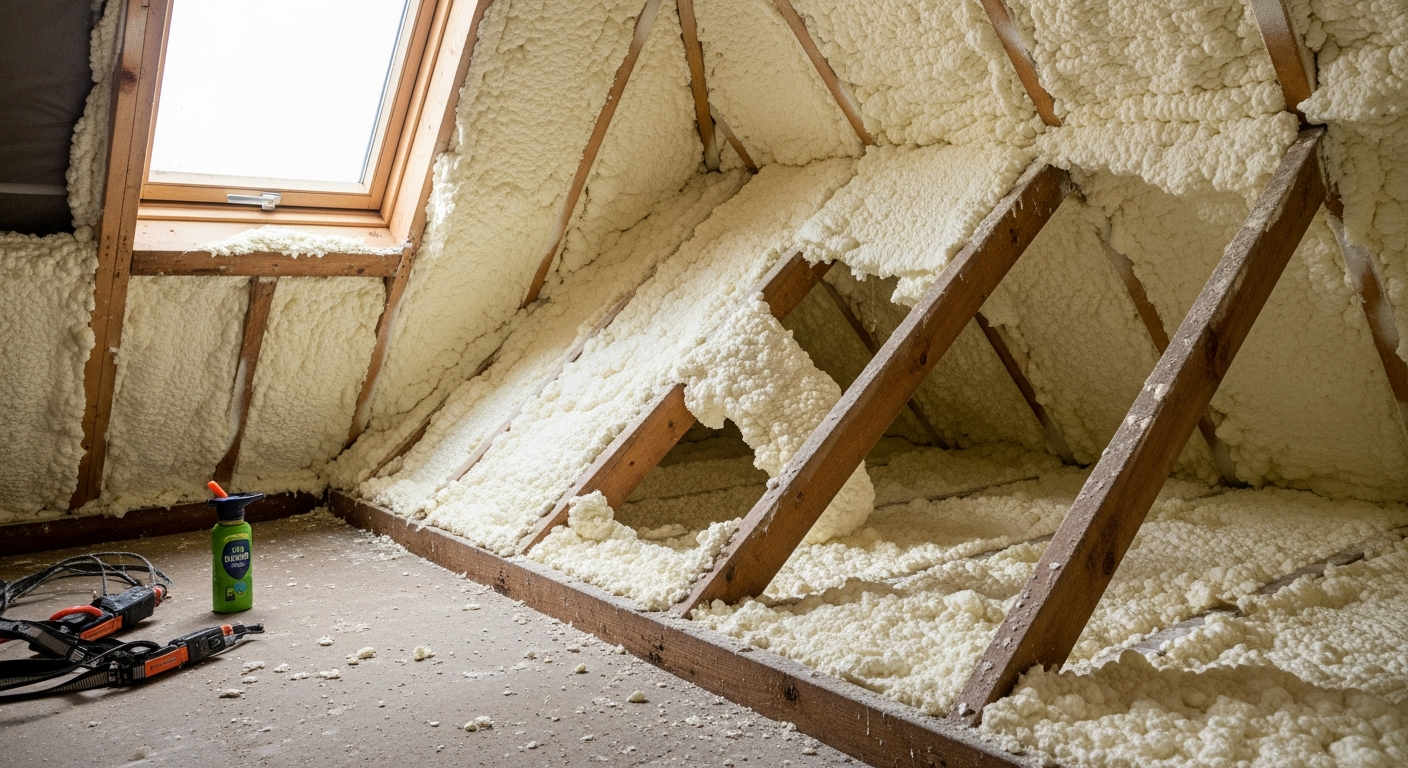
The main issue is accessibility. Once spray foam is applied, it bonds permanently to roof timbers, making it nearly impossible to inspect the underlying structure without costly removal. Surveyors can’t assess the condition of rafters, check for leaks, or identify pest damage. For lenders, this represents an unknown risk they’re increasingly unwilling to accept.
Building societies and major lenders have started flagging properties with spray foam insulation as higher risk. Some request specialist surveys, others impose lending restrictions, and a growing number simply decline applications outright. This shift in lending policy affects property values and marketability, regardless of how well the foam was installed.
How Different Types of Spray Foam Impact Mortgages
Not all spray foam creates equal problems, though lenders rarely make these distinctions. Closed-cell spray foam, which creates an impermeable barrier, poses the greatest mortgage risk. This type prevents any moisture movement and can trap water vapour within the roof structure, potentially causing long-term damage.
Open-cell spray foam allows some vapour permeability but still creates inspection difficulties. While theoretically less problematic, most lenders group all spray foam types together when assessing risk. The installation quality matters enormously, but proving good workmanship becomes nearly impossible once the foam is in place.
Professional installation following manufacturer guidelines and building regulations should, in theory, create fewer problems. However, the mortgage industry moves slowly, and current lending policies reflect worst-case scenarios rather than best practices. Even perfectly installed systems can trigger mortgage complications.
What Mortgage Problems Actually Look Like
When spray foam causes mortgage issues, they rarely appear gradually. Most homeowners discover problems during remortgage applications or property sales when time pressure makes solutions more stressful and expensive. Lenders might request additional surveys, impose higher interest rates, or reduce loan-to-value ratios.
Property valuations can be affected, with surveyors applying cautionary reductions when they cannot inspect roof structures properly. Some insurers also increase premiums or exclude certain types of damage from coverage, creating additional financial implications beyond the immediate mortgage concerns.
The most severe cases involve complete mortgage refusal, forcing homeowners to seek specialist lenders who typically charge higher rates. For those looking to sell, spray foam can limit the buyer pool to cash purchasers or those using specific lenders, potentially reducing sale prices significantly.
Our spray foam removal for mortgage approval service addresses these exact situations, helping homeowners restore their property’s marketability and mortgage eligibility through professional foam removal and structural restoration.
Protecting Your Property’s Mortgage Eligibility
If you’re considering spray foam insulation, understanding current market conditions is crucial. While future lending policies might become more accommodating as the industry matures, current mortgage conditions favour more traditional insulation methods that don’t compromise roof accessibility.
For properties with existing spray foam, early action often costs less than crisis management during sales or remortgage negotiations. Professional assessment can identify whether removal is necessary or if alternative solutions might satisfy lender requirements.
Documentation becomes vital when dealing with spray foam and mortgages. Keeping installation certificates, warranty information, and any structural surveys helps demonstrate responsible installation, though this doesn’t guarantee mortgage approval. Some homeowners find success with specialist mortgage brokers who understand which lenders accept spray foam properties.
Key Takeaways
• Spray foam insulation can significantly impact mortgage approval and property marketability • Lenders are concerned about structural inspection difficulties and potential moisture damage • Both remortgaging and property sales can be affected, often at the worst possible moment • Professional removal may be necessary to restore full mortgage eligibility • Early assessment and planning cost less than crisis management during property transactions
What Our Customers Say
Trusted by homeowners across Nationwide (Based in Southampton) — here's what they have to say.
"Brilliant service from start to finish. The team were professional, tidy, and explained everything clearly. Our energy bills have dropped noticeably since the new insulation went in."
"Had spray foam removed and mineral wool installed. The inspector was thorough and honest about what needed doing. Really impressed with the quality of work."
"We had terrible condensation in our loft. They diagnosed the problem quickly, improved the ventilation, and replaced the old insulation. No more damp and the house is noticeably warmer."
Frequently Asked Questions
Yes, but your options may be limited. Many mainstream lenders now decline applications for properties with spray foam, particularly in roof spaces. You might need specialist lenders who typically charge higher interest rates, or face reduced loan-to-value ratios.
Potentially yes. Surveyors may apply cautionary reductions to valuations when they cannot properly inspect roof structures. The limited buyer pool (those able to secure mortgages on spray foam properties) can also impact sale prices and marketing time.
This depends on your local market and target buyers. If you're attracting mortgage-dependent buyers, removal might be necessary to avoid sale fall-throughs. Cash buyers may be less concerned, but professional assessment can help you make an informed decision based on your specific situation. --- Concerned about spray foam affecting your mortgage or property sale? We provide professional assessment and removal services to restore your property's marketability. Contact us today for a detailed survey and honest advice about your options.
Ready for a Free Survey?
No obligation. We assess your property and provide a detailed quote — usually within 48 hours.